
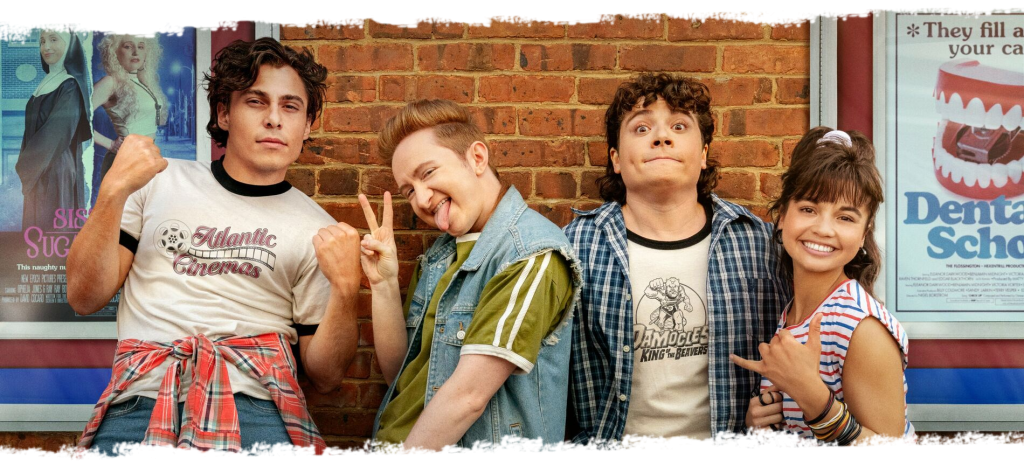
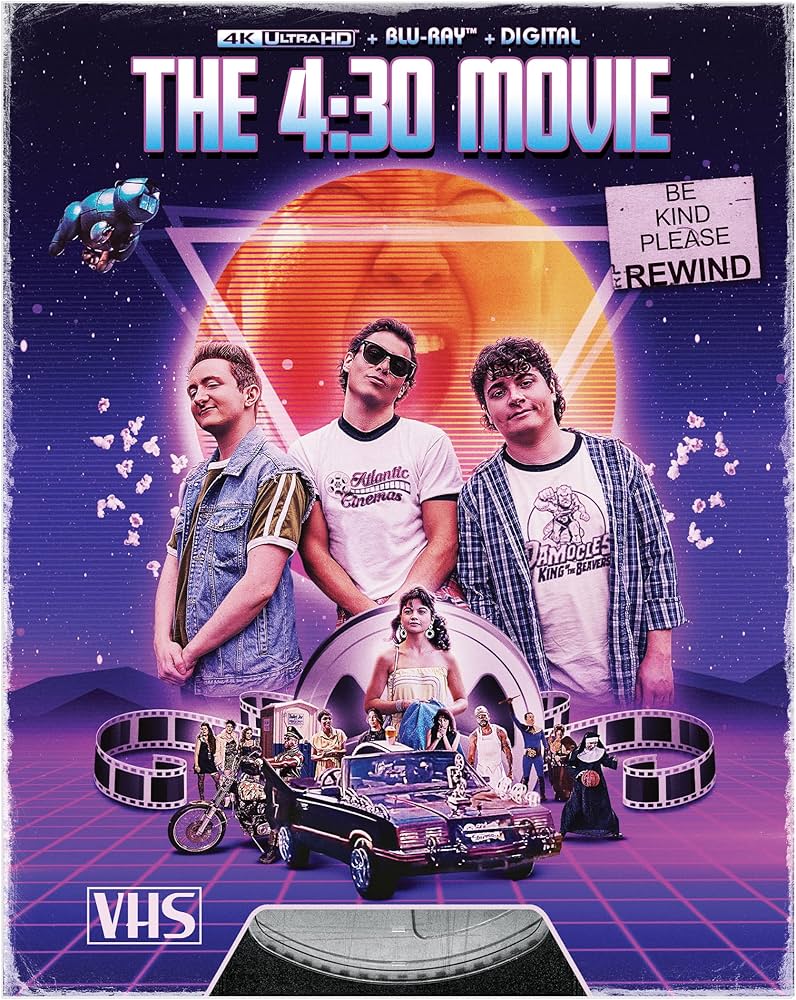
Growing up as a child of the 1980s and 1990s, I was utterly enamored with movies. My friends and I made pilgrimages to our local multiplexes and video rental stores every weekend. As I detailed in a blog entry a few years ago, these locations were the “Cinematic Shrines of My Youth.” One of the filmmakers who impressed me most in the 1990s was Kevin Smith, whose personal, raunchy, and hilarious films were filled with relatable characters who felt like people I knew or would want to know. When I realized Kevin inserted himself into every film, as the character Silent Bob, I felt even more like this dude was somebody I wanted to hang out with. Still, I could not have imagined that a couple decades later, Kevin and I would not only be pals, but we would also collaborate together on his nostalgic love letter to our shared cinematic experiences, The 4:30 Movie.
MEETING SILENT BOB
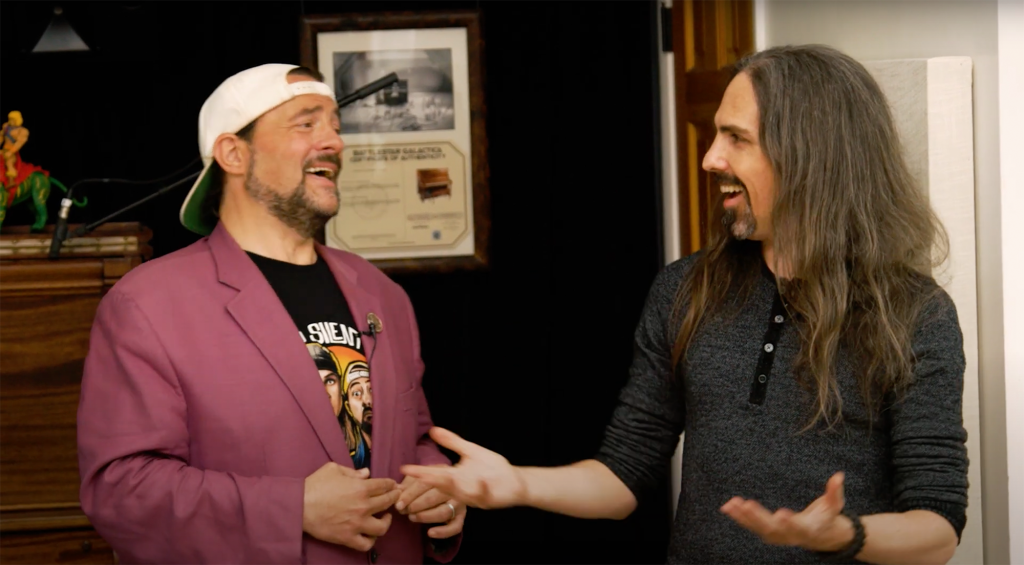
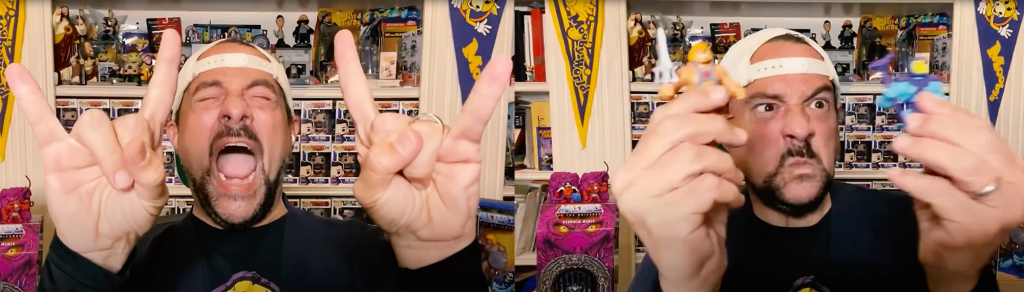
Kevin and I first met when he was looking for a composer for his remarkable Netflix animated series Masters of the Universe: Revelation, based on Mattel’s iconic He-Man character. I boldly proclaimed I would only do his show if he let me write in the style of Metallica mixed with Basil Poledouris’s score for Conan the Barbarian. Kevin responded by singing the love theme from Conan, and I immediately joined in, energized by that familiar exhilarating rush when I meet a fellow film score nerd. When I submitted my first sketch of “He-Man Transforms,” Kevin sent me back his notes in the form of a video of him listening to the music while smashing He-Man and Skeletor action figures together. “I love this guy,” I thought to myself.
When I read that the premise of Kevin’s newest film involved a nostalgic look at teenagers watching movies in the 1980s, my heart fluttered. I had every 1980s film and television score woven into my neocortex—I had to talk to Kevin about this! Even though my massive orchestral scores for Masters of the Universe: Revelation and its follow-up Revolution were nothing like what I imagined The 4:30 Movie would require, I wondered if Kevin would consider me for the job nonetheless.
As summer of 2023 waned, I called Kevin and asked him if I could read the script. “Passion always wins,” Kevin recalled to me recently. “You pursued this movie, like, from the jump. Having somebody reach out to you and be like, ‘I want to do it,’ sometimes that makes all the difference.”
I burned through the relatively short script on the same day he sent it to me. I was struck by how effectively the film transported me back to the days of my own high school youth. Though I am roughly a decade younger than Kevin, I, too, am a product of the 1980s. I knew every single reference Kevin’s script mentioned. His nods to Gremlins filled my imagination with the manic synths of Jerry Goldsmith, and his homage to Flash Gordon triggered echoes of Freddie Mercury singing over pounding octaves in low piano notes. I could hear the score as I read!
I was thrilled when Kevin invited me to join the production team of The 4:30 Movie. Over the years, Kevin and I had spent a great deal of time talking about my relationship with film-scoring legend Elmer Bernstein, himself one of the most iconic composers of comedy film scores in the 1980s. Kevin was tickled that his film that is a love letter to 1980s cinema would be scored by Elmer’s protégé. “You were like, ‘I was born to do an ’80s music score, man!’” Kevin laughed. “Like, you trained under Elmer Bernstein, for heaven’s sakes!”
THE FIRST CUT
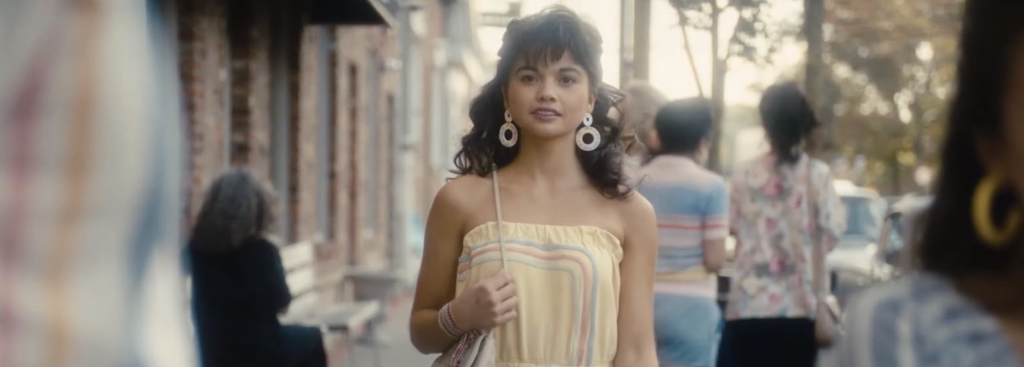
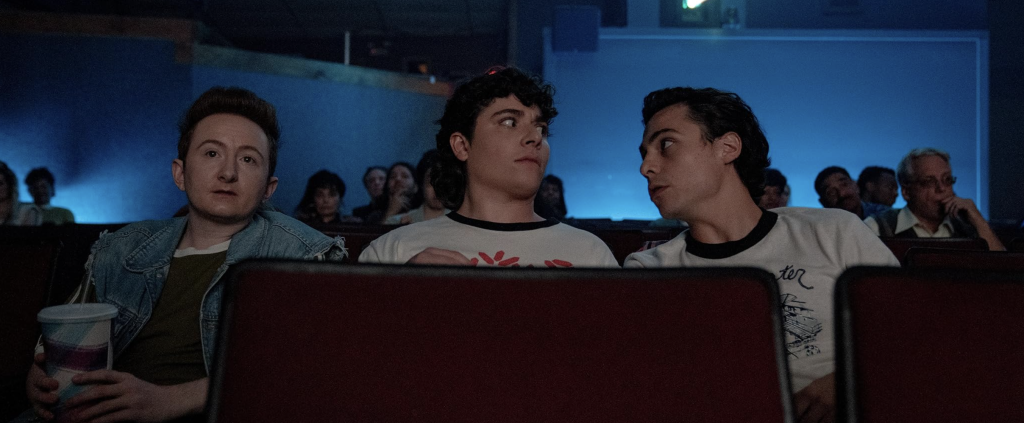
A few short months passed, and by Thanksgiving Kevin had a nearly locked cut of the film that he had personally edited himself. Viewing it, I was immediately struck by how beautifully his young cast brought heartfelt authenticity to the characters. Austin Zajur’s depiction of Brian David was so charming and endearingly awkward that I forgot I wasn’t watching a young Kevin Smith through a time portal. Brian’s crush, Melody Barnegat, was played radiantly by Siena Agudong. Watching Brian hang out with his two best buddies, the frenetic Belly and overly macho Burny, played by Reed Northrup and Nicholas Cirillo respectively, brought back vivid memories of my own hilarious high school buddies. The characters’ adventures through the cineplex were buoyed by frequent, memorable cameos from a who’s who of Kevin Smith regulars and comedy legends, including Rosario Dawson, Jason Lee, Ken Jeong, Method Man, Justin Long, Jason Mewes, Jason Biggs, Diedrich Bader, and Logic.
I also noticed how the location felt so evocative of the era. This multiplex was once the Atlantic Highlands Twin Cinema of Kevin’s youth, and now lives on as Smodcastle Cinemas after Kevin purchased and reopened it. “At the heart of it all, it’s really a love story about a boy and his movie theater,” Kevin said. “It’s the movie theater I grew up going to that I bought with my friends a couple of years ago. When we bought it, one of the first thoughts I thought was like, ‘Oh my god we got a set. We could totally make a movie in a movie theater now.’ If we point the camera in the theater, it’s my childhood. You don’t have to change a thing. These seats are the same seats. The walls are still carpeted. It’s everything that I grew up in. So, if the movie is personal, it’s because it was pushed there by the location. I know a lot about this place; I’ve spent my life here and whatnot.”
Aside from some delightful 1980s pop songs, I noticed there was virtually no temp score in Kevin’s cut. A “temp score” is a collection of cues, usually from various commercially released soundtracks, that a picture editor lays in the edit of a film to help communicate intention to everyone viewing the work-in-progress edit, including the composer tasked with writing original music to eventually replace it. Normally, the director and composer sit down in a “spotting session” and discuss the “spots” where score should go. This is a painstaking process that usually takes anywhere from three to eight hours.
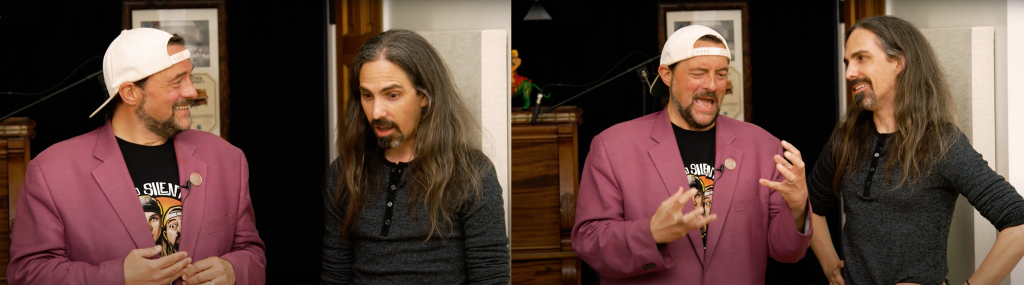
I asked Kevin when we should spot the film and he looked at me like I had a hole in the head. “I was like, hey, man, take it!” Kevin recalled. Kevin made emphatically clear he wanted me to just let loose and write what I thought the film needed. By that point, we had discussed the film at length, and I truly felt like I had a sense of what it should feel like musically. Kevin added, “I remember one thing I said to you was like, ‘You’ve got to make everyone feel, man!’” Taking Kevin’s faith in me as a compliment, I took the film home to my studio.
SYNTH-SOAKED SOUNDWAVES
I wanted to write for The 4:30 Movie a hybrid score, one drawing from both the synth sounds of 1986 and the timeless symphonic traditions that were used then and remain relevant now. At this time, I was well into writing the second season of The Lord of the Rings: The Rings of Power, so my software template was fully stocked with all the symphonic sounds I might require. The synths, however, were another story. I hoped to channel the synth-soaked soul of pop hits from Madonna, Michael Jackson, and Cyndi Lauper, as well as new-wave darlings Devo, the Talking Heads, and Oingo Boingo. I also wanted to reference the synth-heavy film scores that produced shockwaves in cinema at that time, including the works of Harold Faltermeyer, Vangelis, John Carpenter, Charles Bernstein, and Harry Manfredini.
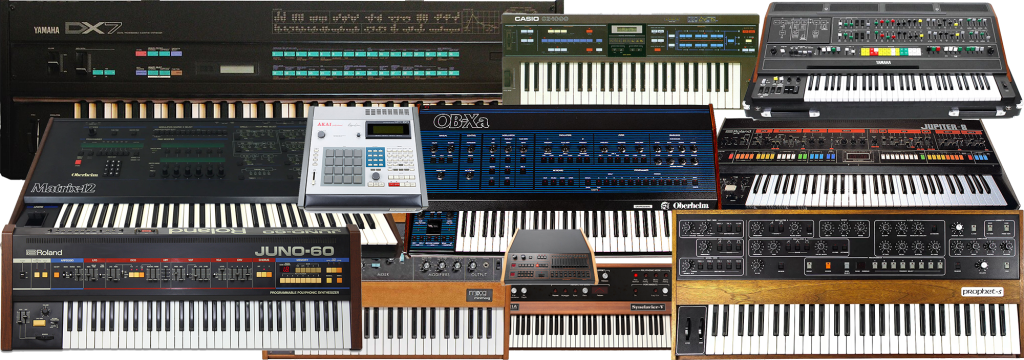
To capture this spirit, I worked closely with my tech team at Sparks & Shadows to assemble a vast collection of new synths I could explore. I leaned mostly on software emulations because they allowed for quick auditioning and preset recall, though the score is not without a few moments of actual 1980s hardware magic! The sounds I found most effective were ones channeling the famous Yamaha DX-7 and Yamaha CS-80, the Minimoog Model D, Synclavier, the Casio CZ-1000, the Oberheim Matrix 12 and Oberheim OB-Xa, the Prophet-5, and the Roland Jupiter 8 and Juno-60, as well as the legendary drum machines the Linn LM-1 and the Akai MPC 60.
Writing The 4:30 Movie very nearly broke my computer. I always like to have every sound at my disposal when I write, so I only have one template; this has over four thousand tracks in it, many times more than recommended. By adding hundreds of new software synthesizers on top of this—many of which are greedy for system resources—my software started crashing a dozen times a day. My Sparks & Shadows tech team logged many late hours helping me navigate this issue, because I stubbornly refused to delete tracks. I need to see all the sounds at my disposal for my imagination to fire properly!
ORCHESTRAL MAGIC
I love synth colors, but I knew I needed a little orchestral magic in my 1980s scores. I also looked to the composer heroes of my youth who experimented most frequently with a combination of contemporary electronics and traditional symphonic technique.
I recalled the work of David Shire, a gifted orchestral writer who cleverly scored the first two reels of the comedy Short Circuit with the bleeping arpeggios of a Synclavier, only introducing orchestral colors as the protagonist robot Johnny Five came to life. Dave Grusin was also big influence here—his adventurous score for The Goonies was predominantly orchestral, but featured flourishes of rhythm section and synthesizers rooting it in the pop music of the day.
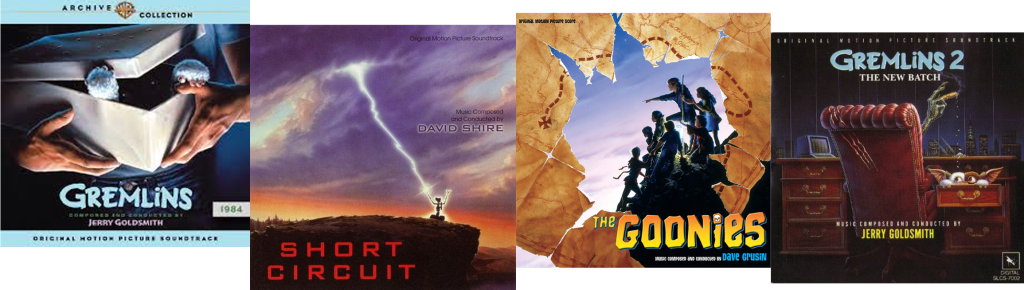
Jerry Goldsmith always pushed the boundaries of synth work during this time period. In 1984, he scored Gremlins with a collection of synths including The Roland Jupiter-6, a Prophet T8, Yamaha’s GS1, Moog’s Memorymoog, two Yamaha DX-7s, and the Oberheim OB-8 synth. By 1990, he expanded his palette for Gremlins 2 with many contemporary early ’90s synths and drum machines.
Before I could actually start scoring footage, I spent a few weeks sifting through thousands of synth presets and drum machine sounds, while enjoying the deep dive returning to all of my favorite 1980s hybrid scores. At last, with my template complete, I set out to write.
COMPOSING THE SCORE
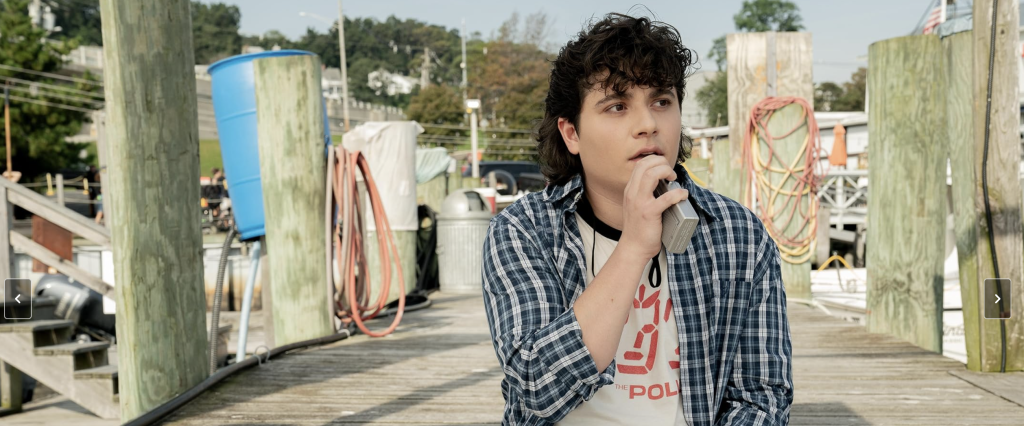
The first cue I wrote was the main title, a lovely scene in which Brian David rides his bike around town, speaking to himself into a cassette recorder. I felt that if I could nail down a theme for Brian, who is essentially an avatar for Kevin himself, that the rest of the film would fall into place. I wrote a nostalgic, sweet little melody for strings and piano, whose rich orchestral nature was offset by a poppy 1980s synth arpeggio, slippery synth bass line, and drum machine foundation.
“The score is another character in the film,” Kevin said. “From the opening chords when Brian David heads out on his bike ride across town, through the opening credits, that gorgeous piece of scoring kicks in that communicates all the hope and the wonder, the banality, and the miraculous of the day in the life of a small-town teenager in the mid ’80s. You could not have asked for a more pitch-perfect score.”
Kevin added, “Suddenly I hear that first track (and I’m the editor as well, so I lay in that first track with picture) and it’s transcendent, for heaven’s sake, because suddenly somebody has done another draft of your script. Think about it! You’re telling the story again, but doing it without words and dialogue, which is even fucking trickier, man. You’re able to capture and complement, if not transcend, if not elevate, lift the movie up. Trust me, I’ve heard it without the score. It lifts the movie up!”

With Kevin’s confidence fueling my own, I dove into the rest of the score. I crafted a sultry saxophone love theme for Melody Barnegat with an inherently cheesy quality that helps remind the audience that this theme represents how Brian David sees her in his adolescent imagination. I also crafted a bombastic theme for professional wrestler Major Murder, inspired by the machismo television music of the era, especially The A-Team and G.I. Joe. My team at Sparks & Shadows, including Pierre-André Rigoll and my brother, Brendan, contributed hilarious additional music for the various trailer parodies playing in the theater.
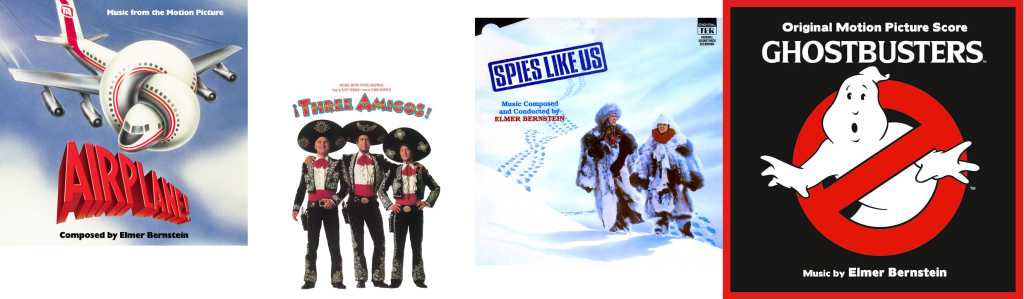
My biggest musical influence on The 4:30 Movie remained the king of 1980s comedies, Elmer Bernstein. During the decade in which this film takes place, Elmer scored Airplane!, Ghostbusters, Three Amigos, Funny Farm, Spies Like Us, and more. Watching those films now, I can still see his mind at work, always looking for the moments to play genuine emotion. Truly, his score for Animal House virtually pioneered the entire art form of scoring comedy films with “serious” music. Like his contemporaries Grusin, Shire, and Goldsmith, Elmer was at the forefront of hybrid scoring. His score to Ghostbusters bristled with bone-chilling synths, while one of the world’s first electronic instruments, the Ondes Martentot, slithered through the soundscape like a ghost.
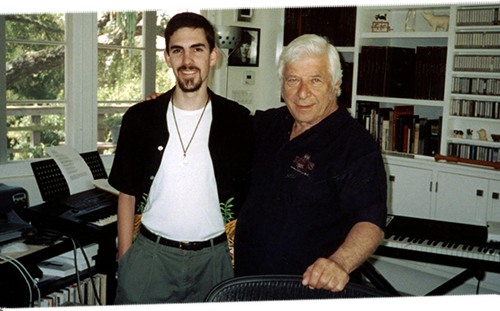
I was honored and fortunate to work with Elmer for nearly a decade, very late in his career and early in mine: I met him when I was sixteen. During this time period, he was working almost exclusively on intimate character dramas. I learned that conveying the right emotion is the most important task for the composer. At all times, he encouraged me to ask, “What do you want the audience to feel?” Elmer’s advice resonated with me as I scored The 4:30 Movie.
While I had fun with all the synth-fueled stylistic parodies and homages, I always watched closely for the film’s many moments of genuine emotional connection between characters. I was never afraid to let the score offer heartfelt emotional support to Kevin’s earnest autobiographical tale. The montage after Brian David’s gut-wrenching fight with his best friend Burny at the end of the film’s second act was one of those sequences where I felt I could channel genuine sadness with a rich symphonic passage, floating atop shimmering ’80s synthwave textures. However, no scene in the film was more orchestrally magical than when Brian sits on the dock, dreaming of his future. Here, rich strings soar the melody of his main theme, as he utters the immortal words, “a 24 karat case of love.”
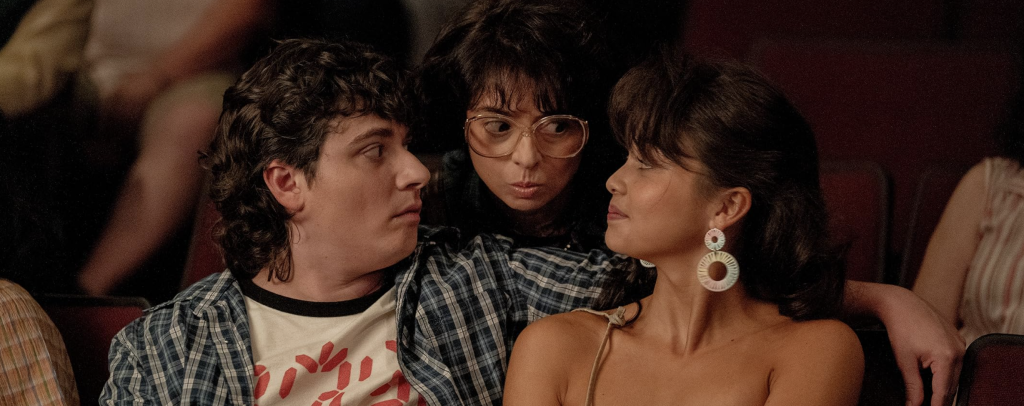
24 KARAT CASE OF LOVE
From the moment I first read Kevin’s script, I knew I wanted to write a 1980s anthem based around his dialog line, “a 24 karat case of love.” As scoring drew to a close, I had to try it!
I expanded upon my main title theme and shaped it into a rough song form. Then, I called my brother, Brendan, to write the lyrics and sing the melody. Writing and producing songs for the nostalgic The 4:30 Movie gave us chance to back to the days when were two crazy kids making music together in the small harbor town of Bellingham, Washington.
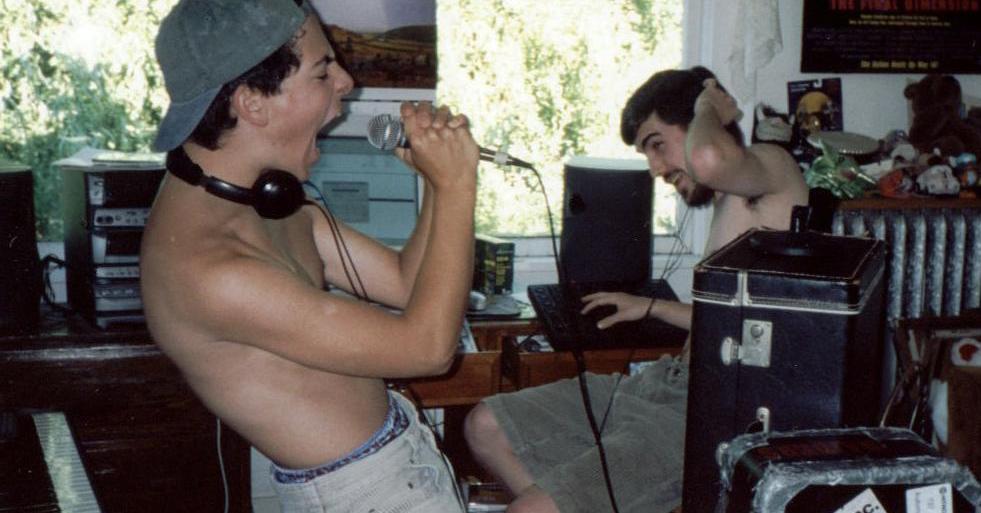
Brendan was already fully engaged with the film, having written some of the film’s trailer music, most notably “Astroblaster and the Beaver Men,” and having co-written with me the film’s final score cue. However, I had higher hopes for “24 Karat Case of Love.” Brendan and I had collaborated together in this manner many times over the years, most recently on my debut rock concept album, The Singularity, for which he co-wrote the majority of the record with me. I also knew he had a huge affinity for 1980s pop music, able to channel the vocal stylings of David Bowie, Freddie Mercury, Simon Le Bon, David Byrne, and Danny Elfman, among others. He was the perfect guy to write this song with.
Brendan and I labored extensively on the song for a few weeks. While much of it came together quickly, we struggled to find a hook in the chorus that grabbed the ear the way I hoped. The film’s main title theme was our chorus, which felt appropriate because it was melodic and lyric friendly. But it simply wasn’t as catchy as I wanted. We hammered away at ideas until the breakthrough happened: What if we treated that main title melody like a lengthy pre-chorus? Then we could follow it up with a better chorus, something so simple, so honest, it borders on being juvenile. We repeated the line “24 karat case of love” over a simple groove and the song magically clicked, at last.
I sent a demo of the song to Kevin, who immediately connected with it. “The title of the song and the hook are predicated on something that the Brian David character says in the beginning of the movie,” Kevin explained, “and that is predicated on something that I actually said as a young man into a tape recorder. I would bike around Highlands and talk about the exact same things, including my ex-girlfriend, about whom I literally said into the tape recorder, ‘I got a 24 karat case of love.’”
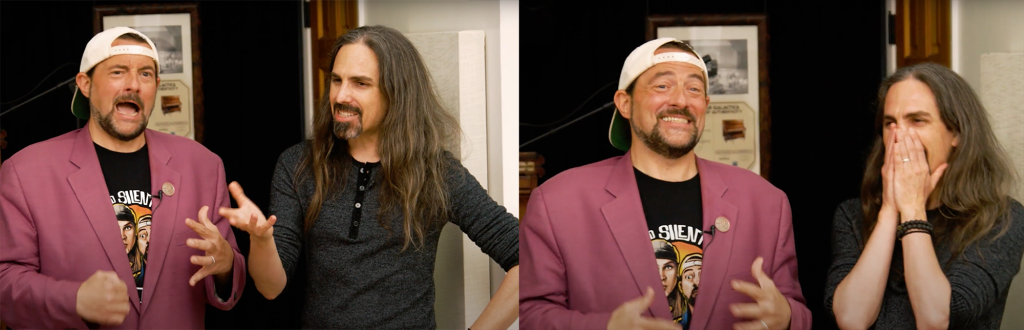
“Bear, you redeemed one of the stupidest things I’ve ever said in my life. You were so sweet. You go, ‘That wasn’t stupid. That is the sincerity of a sixteen-year-old boy. That’s how they think and feel and speak.’ And that song captures that energy, that moment, that era in life.”
With Kevin’s enthusiasm fueling our work, Brendan and I continued to improve the demo. He replaced his scratch vocals with more refined vocal performances. The cherry on the sundae was adding Danny Janklow’s energetic, vintage-perfect saxophone solo, which triggered my nostalgic memories of classic Saturday Night Live intros.
Kevin added the song to his edit of the film and watched the reaction from his friends when it came up at the end. “Brendan singing ‘24 Karat Case of Love’ was pitch-perfect to the era,” he said. “Everybody who watched the movie here at the house before it came out would be like, ‘Why do I know that song?’ I was like, ‘You don’t! It’s not out yet!’ But it is composed and sung in such a way that it feels like a long-lost friend. Like, ‘Oh my God, I forgot this used to be my favorite jam!’ I love it. I feel like that song will have a longer, better life than the movie that spawned it. It redeemed the dumbest thing I ever fucking said. And it’s so singable. It’s a total earworm! Bear and Brendan understood the assignment and understood it beyond comparison.”
Reflecting on how “24 Karat Case of Love” wraps up the film, Kevin sighed. “It’s honestly one of the most joyous endings of any movie I’ve ever made in my life. You listen to Brendan’s vocals going off as we roll those credits … it’s everything, man!”

24 Karat Case of Love
Music by Bear McCreary
Lyrics by Brendan McCreary
I’m gonna bet it all, I’m close this time
No, it don’t matter whatcha say
Can’t talk me down, I know our stars align
At the risk of sounding cliche
It’s plain to see you’re so original
The way you move is so en vogue
You got that rainy summer day perfume
You’re likely to make me explode
Somewhere out there…
(chorus)
I’ve been hearing
This love song
Sleepless late nights
Radio on
Lost and lonely
My little room
Soul stargazing
Are you listening too? Oh…
Got a 24 karat case of love
Got a 24 karat case of love
Got a 24 karat case of love
Got a 24 karat case of love, love
I’ve spent far too much time imagining
Just being a part of your world
The feeling of your heart is dazzling
If you were mine and I was yours
I get romantic, see my hopeless eyes
Oh yes I’m cooing like a dove
It’s just like magic, yes we’re bona fide
24 karat case of love
Somewhere out there…
(chorus)
You don’t know how I’m playing
This loving game
I’ve been running to ya
Do you even know my name
You can’t imagine
The beating of my heart
And all I want is to show ya
Somehow, some way
(chorus out)
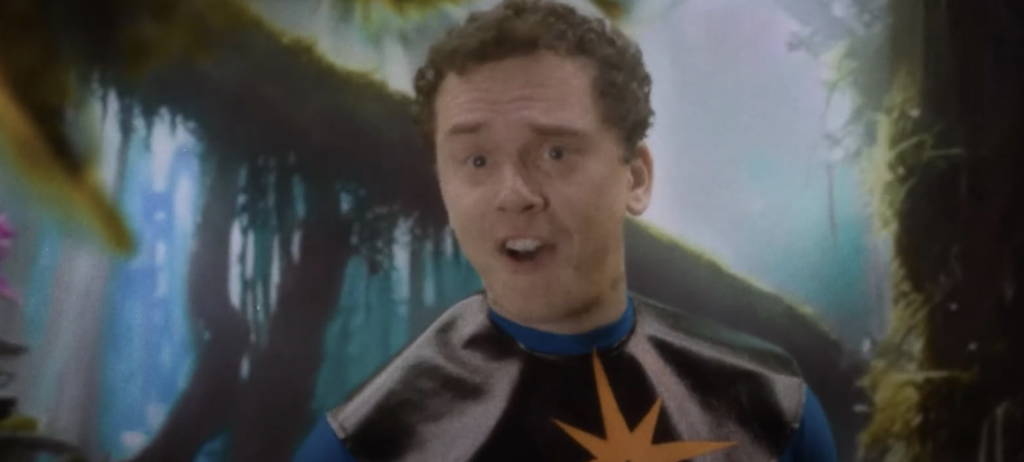
ASTROBLASTER AND THE BEAVER MEN
When I first read Kevin’s script, nothing ignited my imagination more immediately than the fact that it required a parody of, and loving homage to, the music that Queen wrote for the pulp classic film Flash Gordon. My brother and I have grown up as huge fans of Queen, and it’s arguable that no rock band has influenced me more, as they straddle the line between epic rock and operatic music. Brendan and I even collaborated with Metalocalypse’s Brendon Small in 2011 to put on a Queen tribute concert on the twentieth anniversary of Freddie Mercury’s tragic passing. I will write and produce music in the style of Queen in my free time anyway, so if there’s a chance to do it for a Kevin Smith film, let me at it!
“I’m smart enough to know you always let the artists lean into what they’re passionate about. And one of the first things you responded to was Astroblaster,” Kevin explained. “I love that! That’s passion! And once you got that out of your system, everything else is going to be even better for it because you just indulged that passion.”
I knew the best way for this track to materialize was for me to not get in the way: I asked Brendan to write it. When he sent me his first draft, I threw my earbuds on and took my phone out into the yard, pacing back and forth as I listened. I did not realize how often I was bursting into exuberant laugher until my wife, Raya, finally opened the screen door and asked me what was going on.
Raya’s curiosity was fitting, because she would shortly thereafter help Brendan and me in parodying one of the most memorable aspects of Queen’s Flash Gordon soundtrack album: the inclusion of the film’s dialogue. Raya played the evil General Kaka, while our dear friend Ward Roberts portrayed the sniveling lieutenant Squeegee. Brendan recorded the villainous role of Lord Ping-Ping.
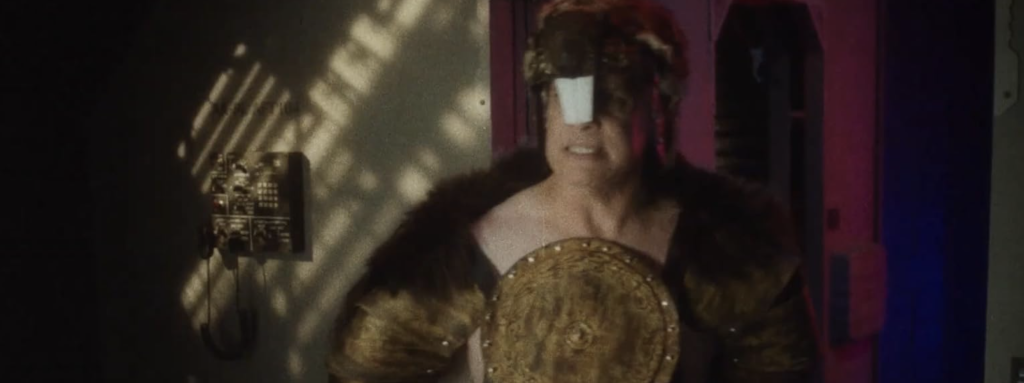
We knew that dialogue lines for “Astroblaster and the Beaver Men” would not be complete without Astro Blaster himself, and one of the Beaver Men. Around this time, Kevin was shooting additional photography in Los Angeles, including extensive scenes for the fictional Astroblaster film. I asked him if I might attend the shoot in hopes of recording some additional lines that my brother had written specifically for the song.
Not only did Kevin Smith invite me to the set, but when he had finished his scenes, he let me direct the brilliant cast in performing the additional lines needed for the soundtrack. I was thrilled! The Beaver Man was played by one of my favorite character actors Diedrich Bader, who brought hilarious sincerity to the role. I was delighted to meet one of my favorite rappers of the last decade, Logic, who portrayed the titular hero himself, Astroblaster. I had a blast working with them. I was especially entertained by Logic’s proud declaration: “Give it up, Ping-Ping! Your reign of terror over these beavers is over!” Hearing that followed up by Brendan’s “Damn you, Astroblaster!” cracks me up every time!
Everyone on Kevin’s set was inviting and collaborative, and I felt inspired every second I was there. I asked Kevin about this and he said, “You collect a bunch of fellow filmmakers around you, and weave the fabric of a family. And it makes you want to go back to work. You know, some people hate their jobs, but since I get to go to work telling the stories I want to tell with the people I love, it’s a dream job. It’s also our love language. It’s how we communicate with people.”
In the end, I could not be happier with our album track “Astroblaster and the Beaver Men.” Kevin put it best: “If you know that Flash Gordon track, it is a pitch-perfect Mad magazine version of Queen’s opening title, even down to the dialogue.” Perhaps the greatest compliment Kevin could give the song appeared in the film’s opening narration (recorded a few weeks later) in which an unseen radio DJ calls out, “McCreary is back with the song of the summer, ‘Astroblaster and the Beaver Men!’”
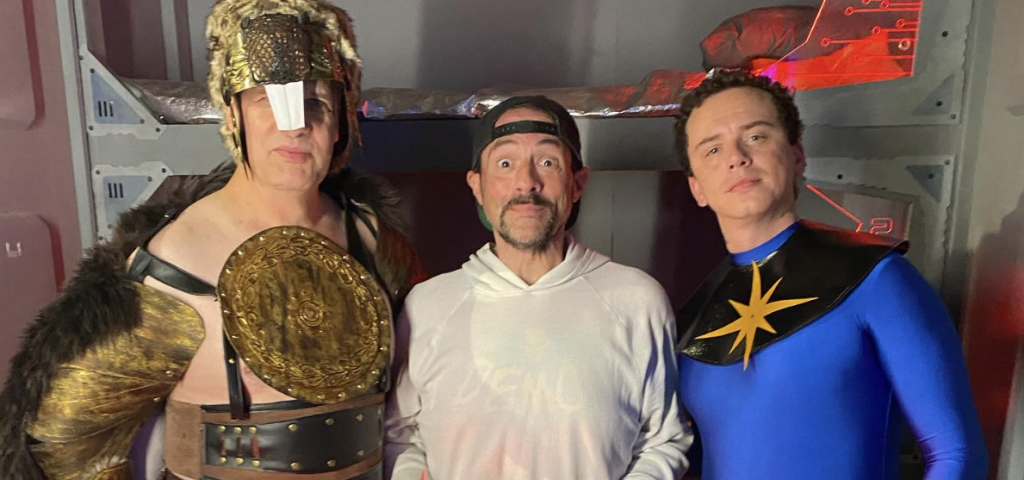
Astroblaster and the Beaver Men (feat. Brendan McCreary)
Music & Lyrics by Brendan McCreary
Astroblaster
And the beaver men!
Astroblaster
Friend to the beaver men!
And the beaver women!
Astroblaster
Best bros with the beaver men!
And the beaver women!
And the beaver children!
So strong
Ten times a grown man
So fast
So catch him if you can
So smart
A real rocket man
Blast off
To planet Bongo
Just cause
To save the beaver men
He’s not a beaver
Not a buck tooth or a tail
Don’t mate for life
And he don’t smell like vanilla
Settle down, with a beaver girl
Just a beaver boy in his beaver world
Forgotten all about his home on earth
Hey hey hey!
All right let’s get it goin’, get it goin’, get it goin’!
Watch this guy build this dam!
Bring on the beaver!
Yes, yes!
I love buck teeth!
Oh shooter!
So, you feel like you ain’t a real beaver
Well, it’s really just a state of mind
Chew on that wood
Build on that dam
Get yourself a beaver wife
No, you can’t ever really go home now
Playing hockey, live a normal life
Yeah, you got that beaver fever
Got the beaver fever…
Astroblaster and the beaver men!
THE BAND
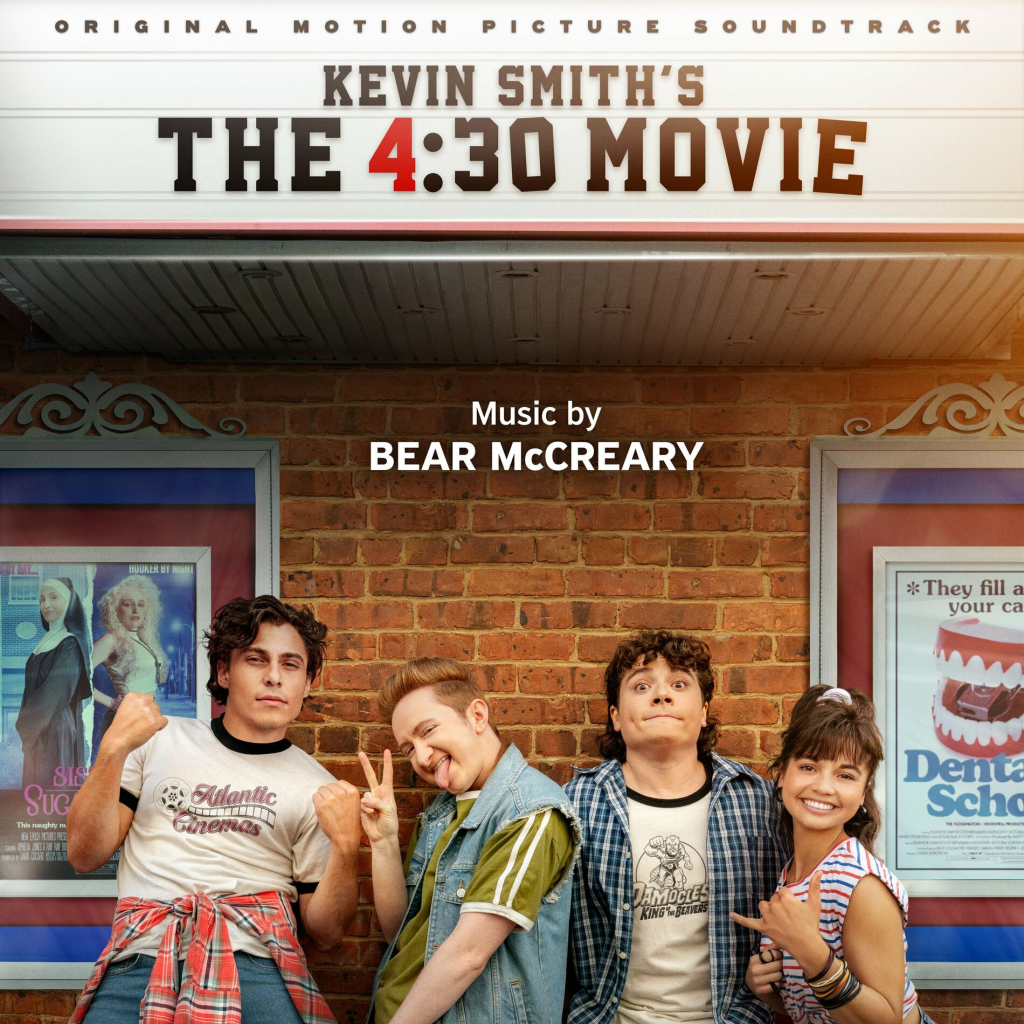
That feeling of working with a close-knit family is not reserved only for film sets, for it is very much how I feel about working with my entire music team at Sparks & Shadows. They were vital to the completion of this score. Pierre-André Rigoll contributed hilarious additional music, while also helping me navigate the project’s many logistical challenges. I owe a huge debt of gratitude to Brendan McCreary for writing and co-writing incredible songs, as well as contributing additional score cues.
The sounds of the 1980s were channeled perfectly by score mixer Forrester Savell. I first worked with Forrester on my debut solo album, The Singularity, and I knew he would absolutely crush this project. And he did.
I would also like to thank my tireless executive assistant Marisa Gunzenhauser, score recorders Viktor Szabó and Ben Sedano, scoring coordinator Hannah Lustine, tech assistants Dayna Ambrosio and Peter Kohrman, orchestrators Jamie Thierman, Sean Barrett, Benjamin Hoff and their consultants Ed Trybek, Jonathan Beard, Henri Wilkinson, copyists Andrew Harris and Matthew Carlton, and music editor Denise Slenski. Danny Janklow brought sexy saxophone back with an incredible solo on “24 Karat Case of Love,” while Levi Gillis provided the romance and the sleaze with incredible saxophone work on the rest of the score. Thanks are also due to my reps at Kraft-Engel Management.
I am grateful to conductor Péter Illényi for leading a remarkable string ensemble in Budapest, Hungary. Last but certainly not least, I’d like to express my gratitude for soundtrack album producer Joe Augustine and album coordinators Reed Trachy and Gabrielle Fastman, for their help bringing this album out on Sparks & Shadows Records.
NOSTALGIC REFLECTIONS
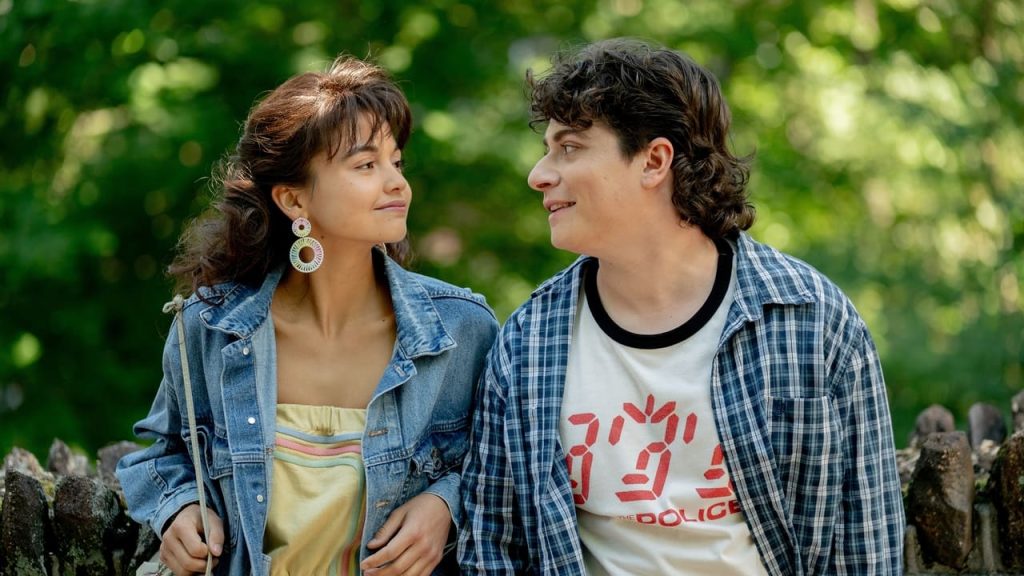
After a limited theatrical run, The 4:30 Movie has now found its way to streaming. The soundtrack album, featuring my score and songs, is currently available from Sparks & Shadows Records. I am excited to see this delightful little cinematic confection find an audience.
I was hoping Kevin would give me the chance to reconnect to memories of my youth spent visiting the multiplexes every weekend. And yet, it would seem that my score ultimately helped Kevin reconnect with his own. “For my whole life, when I think back on my memories of childhood, they’re quiet,” Kevin explained. “Now there is a score to my actual childhood. When ‘I hear the score to The 4:30 Movie, since the movie is so stolen in bits and pieces from my life, I now have something to lay under it that I never had before, man. That’s the highest compliment I could give the score: it re-scored my entire young life. That’s how evocative that fucking score is, that it now lives in my mind, locked in with the actual memory itself. Isn’t that fucking nuts?”
I laughed at that idea—it really is fucking nuts.
“I think the movie will have a long life, and if it does, it has so much to do with the score,” Kevin said. “It’s just the beating heart of the flick at times, man. It’s really, really, really, really wonderful.”
—Bear
